

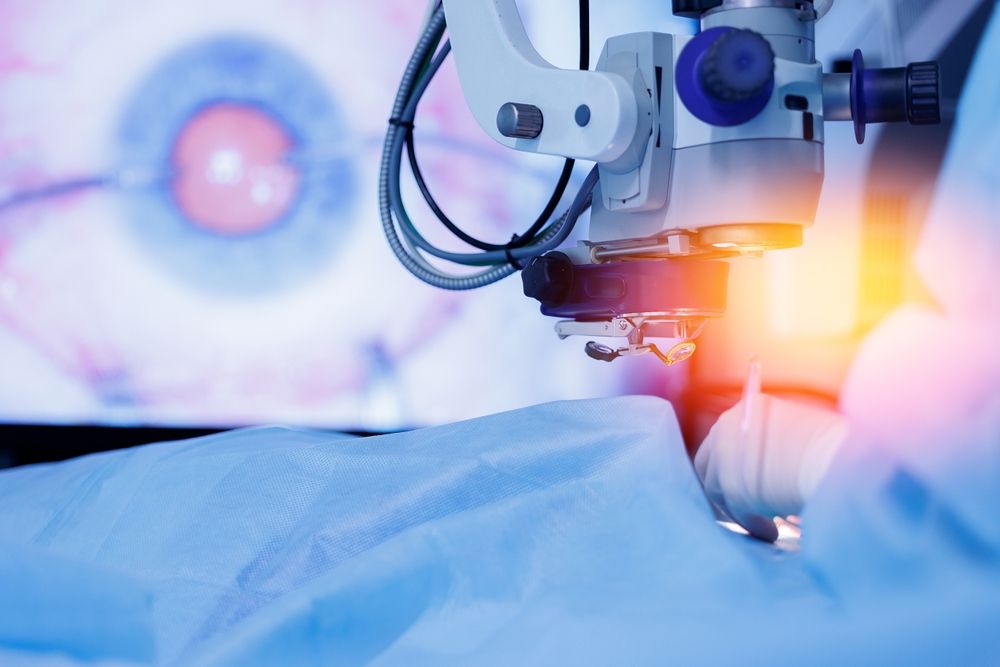
Understanding LASIK can feel overwhelming, but breaking down the procedure helps make it more approachable. At Colorado Eye Clinic in Greenwood Village, Denver, CO, Dr. Abed Namavari often explains LASIK in simple terms so patients can understand how it improves vision. LASIK, short for Laser-Assisted In Situ Keratomileusis, is a laser eye surgery designed to correct common vision problems such as nearsightedness, farsightedness, and astigmatism. The key idea is that LASIK reshapes the cornea—the clear, dome-shaped surface at the front of the eye—so light entering the eye focuses correctly on the retina, resulting in sharper vision.
How the Eye Sees and Why Vision Can Be Blurry
Before diving into the LASIK process, it helps to understand the role of the cornea and lens. Light enters the eye through the cornea, which bends or refracts the light and passes it through the lens to focus on the retina at the back of the eye. Ideally, the cornea and lens focus light precisely on the retina. When the shape of the cornea or lens is slightly irregular, light does not focus correctly, causing blurry vision. This can happen due to nearsightedness, where light focuses in front of the retina; farsightedness, where light focuses behind the retina; or astigmatism, where irregular corneal curvature causes distorted vision.
Vision problems like these are very common, and LASIK addresses them by altering the cornea’s shape to bring light into perfect focus. By reshaping the cornea with laser precision, LASIK can significantly reduce dependence on glasses or contact lenses.
The LASIK Procedure Step by Step
LASIK involves several precise steps that work together to reshape the cornea safely. First, a surgeon creates a thin flap in the outer layer of the cornea. This flap can be created using a microkeratome (a small blade) or a more modern femtosecond laser. Creating this flap allows the surgeon access to the underlying corneal tissue without removing the outer protective layer entirely, which promotes faster healing.
Once the flap is lifted, an excimer laser is used to remove microscopic amounts of corneal tissue. The laser’s action reshapes the cornea based on measurements taken during a preoperative eye exam, correcting the patient’s specific vision problem. After the reshaping is complete, the corneal flap is carefully repositioned over the treated area, where it naturally adheres without the need for stitches. The entire procedure typically takes less than 30 minutes for both eyes, and the laser reshaping itself only lasts a few minutes per eye.
The Science Behind LASIK
The excimer laser used in LASIK is extremely precise and can remove tissue without damaging surrounding areas. It works by breaking molecular bonds in the corneal tissue in a process called photoablation. Because the laser removes only a few microns of tissue at a time, the surgeon can make very fine adjustments to the cornea’s curvature. These adjustments change how light is focused onto the retina, allowing for clearer vision.
LASIK relies on careful planning and measurements, including corneal thickness, curvature, and eye shape. Each patient’s eyes are unique, so the laser treatment must be tailored specifically. The combination of advanced technology and an experienced surgeon ensures that the procedure can be highly effective, providing a safe and predictable correction for most patients.
Recovery and Vision Improvement
After LASIK, patients usually experience rapid improvement in vision, often within a day or two. Mild side effects like dry eyes or temporary glare are common but typically resolve within weeks. The corneal flap acts as a natural bandage, promoting healing and minimizing discomfort. Patients are advised to follow post-procedure care instructions closely, which may include using prescribed eye drops and avoiding rubbing the eyes.
While vision continues to stabilize over several weeks, most individuals notice a dramatic difference almost immediately. Regular follow-up visits allow the surgeon to monitor healing and ensure that the cornea maintains the desired shape. LASIK does not prevent age-related eye changes like presbyopia, but it can significantly reduce reliance on corrective lenses for everyday activities.
Final Thoughts
LASIK is a sophisticated procedure that combines advanced laser technology with an understanding of eye anatomy to correct vision problems. By reshaping the cornea, LASIK allows light to focus properly on the retina, offering clear, sharp vision for many people. At Colorado Eye Clinic in Greenwood Village, Denver, CO, Dr. Abed Namavari emphasizes that understanding the science behind LASIK helps patients make informed decisions about their eye health. This knowledge empowers individuals to appreciate how modern ophthalmology transforms vision in a safe, precise, and effective way.
Resources:
- Pallikaris, I. G., Papatzanaki, M. E., & Stathi, E. Z. (1990). Laser in situ keratomileusis. Journal of Refractive Surgery.
- Sugar, A., & Rapuano, C. J. (2002). LASIK complications: Etiology, management, and prevention. Ophthalmology Clinics of North America.
- Kymionis, G. D., & Tsiklis, N. (2011). Corneal wound healing after LASIK. Survey of Ophthalmology.